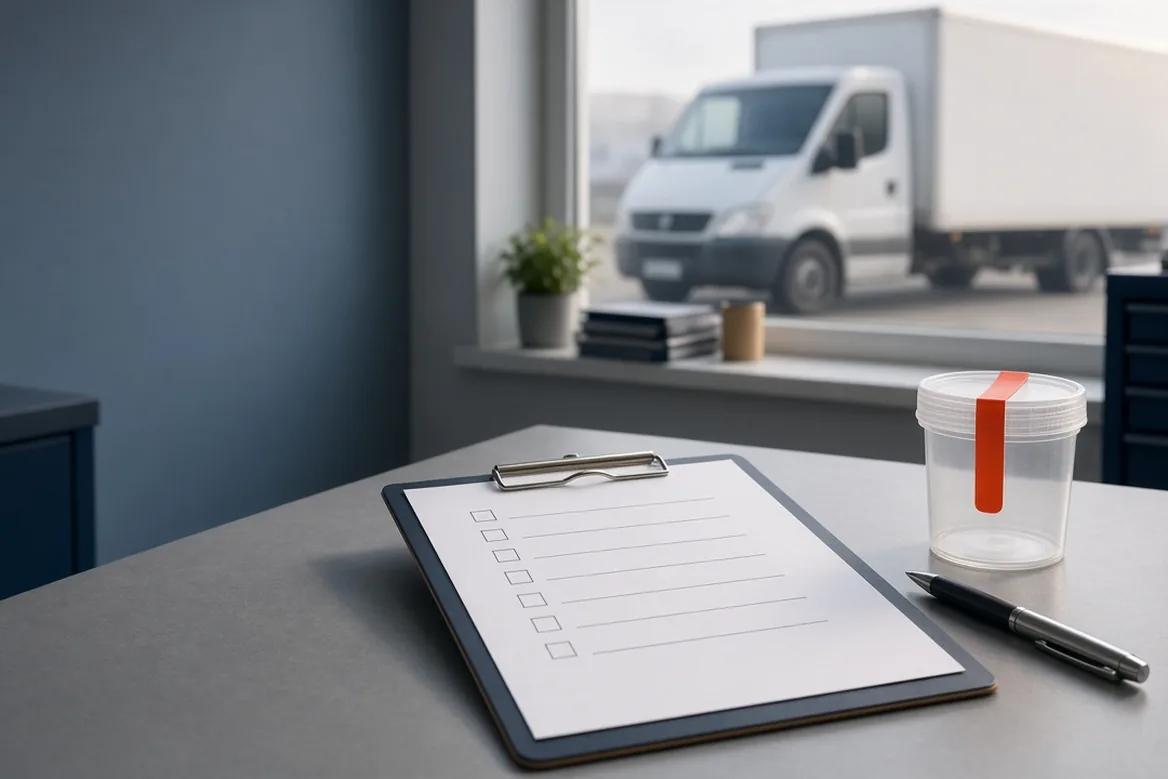
Prepare your workplace for post-accident drug testing with a clear policy and practical steps. Learn why timing matters, who triggers a test, where to collect samples, and how DOT rules differ from your own policies.
Why Being Ready Matters for Post-Accident Drug Testing
Workplace accidents involving drivers, warehouse crews, and field staff can be stressful. Having a clear plan for post-accident drug testing helps employers respond quickly and fairly. A well-prepared policy protects your team, supports safety efforts, and ensures compliance with applicable regulations.
This guide walks you through key steps to have in place before an accident happens.
Timing Is Critical After a Workplace or Vehicle Accident
When an accident occurs, timing can affect the accuracy and validity of drug test results. Many drugs leave the system quickly, so ordering a test promptly is important.
For example, the U.S. Department of Transportation (DOT) requires post-accident drug tests to be done within specific time frames for certain transportation employees. While these times vary by agency and situation, acting quickly minimizes delays.
Even if a DOT test is not required, your employer drug testing program should define how soon after an incident testing will occur. Clear timing guidelines help ensure any testing is meaningful and defensible.
Decide Ahead of Time Who Triggers a Post-Accident Drug Test
One of the most important parts of your post-accident drug test policy is defining who decides if testing is necessary. This might include:
- Supervisors or managers trained to recognize qualifying accidents
- Safety officers or HR personnel
- Designated company representatives
Having clear authority prevents confusion during stressful situations. It also ensures that testing decisions are consistent and based on objective criteria.
Your policy should describe what types of accidents or incidents require testing. For example, you might require a workplace accident drug test if an employee is involved in a vehicle crash causing injury or property damage, or if a warehouse incident results in a lost-time injury.
Know Where Employees Can Be Tested
Once a testing decision is made, employees must be directed to an approved collection site promptly. SaffHire partners with Labcorp collection sites nationwide, offering convenient locations for drug testing.
Before an accident occurs, identify nearby Labcorp sites your employees can use. Make sure supervisors and safety staff know how to contact SaffHire to order tests quickly and arrange specimen collection.
Having this information ready reduces delays and helps maintain the integrity of the testing process.
Document Every Step of the Decision and Testing Process
Thorough documentation is key to a transparent and compliant post-accident drug testing program. Your policy should require recording:
- Details of the accident or incident
- Who authorized the drug test
- Time the decision was made
- Time the employee was notified and tested
- Any refusals or difficulties in testing
Good records support your company’s safety goals and can be important if questions arise later about the testing process.
Understanding How DOT Post-Accident Rules Differ From Your Own Policy
If your workforce includes drivers or employees covered by DOT regulations, be aware that DOT post-accident testing has specific rules. These include which accidents trigger testing, who must be tested, and strict time limits for conducting tests.
Non-DOT employers often have more flexibility to set their own post-accident drug test policies. However, it’s important to ensure your policy aligns with any applicable DOT requirements if your employees fall under those rules.
To get the exact DOT post-accident testing requirements, consult resources like the Federal Motor Carrier Safety Administration (FMCSA) and the DOT Office of Drug and Alcohol Policy and Compliance (ODAPC).
Putting It All Together: Creating a Practical Post-Accident Drug Test Policy
Here’s a simple checklist to prepare your workplace:
Define what types of accidents require drug testing.
Assign who has authority to order tests.
Establish time frames for testing after incidents.
Identify nearby Labcorp collection sites for quick specimen collection.
Train supervisors and safety staff on the policy and procedures.
Document every testing decision and action.
Review and update the policy regularly.
By having these elements in place, you ensure your post-accident drug testing program runs smoothly when it matters most.
How SaffHire Supports Your Readiness
SaffHire Background Screening simplifies ordering post-accident drug tests through trusted Labcorp collection sites nationwide.
If you’re developing or updating your post-accident drug test policy, partner with SaffHire to streamline your testing process and stay prepared.
---
*This article is for informational purposes only and does not constitute legal advice. Employers should consult appropriate legal and compliance experts when developing drug testing policies.*
SaffHire helps employers build background screening packages based on role, industry, risk level, and compliance needs. Contact SaffHire to review the right screening package for your hiring process.